Francesco Maria Talò: “Trieste Can Be Europe’s Springboard to the Indo-Pacific”
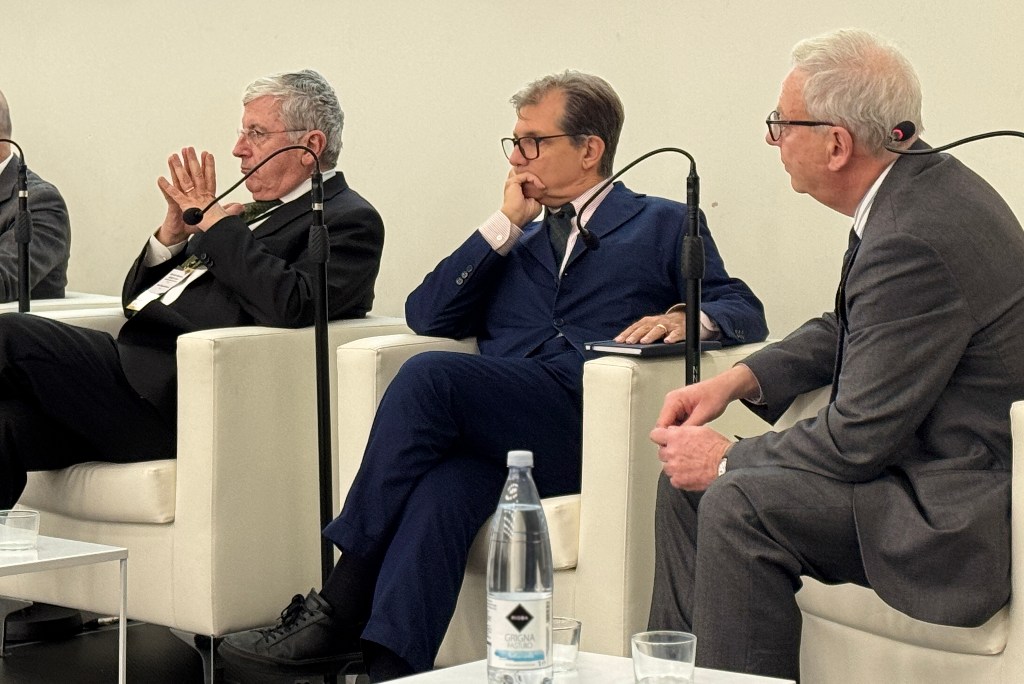
December 6th, 2025 – 3:10 PM – Yesterday, shortly before his speech at the Trieste Summit, Francesco Maria Talò, Italy’s Special Envoy for the IMEC (India–Middle East–Europe Economic Corridor), met with our editorial team. He outlined the strategic role of the Port of Trieste and the geopolitical and commercial prospects of the corridor: “**Trieste has great advantages dictated by its geographical position; these are absolutely objective facts as it is the northernmost port in the Mediterranean,” explained Talò. He also recalled how Prime Minister Giorgia Meloni’s recent visit to the leaders of the Gulf Cooperation Council highlighted the city’s relevance: “She talked about IMEC, and she talked about Trieste. I think it was a truly important occasion, also because it is very rare for such an important foreign guest to be welcomed at this summit.” According to the Special Envoy, Trieste has the potential to become “**the gateway to the productive heart of Europe,” with privileged connections to Germany and Central and Eastern European countries, many of which are rapidly growing.
Concrete Investment and the Role of Experts
Regarding infrastructure investment, Talò was clear: “We’ve discussed a lot, but there hasn’t been much discussion about concrete investments. Technicians, engineers, and transport economists need to discuss it more”, in order to identify the necessary works, evaluate their costs and returns, and make Trieste internationally competitive. According to Talò, the focus on the new President of the Port Authority and the collaboration with Deputy Minister Rixi shows a step forward in governance and concrete decision-making: “We are eagerly waiting for precise and technical indications on what to do”.
The Free Port as Added Value
A central element of the strategy is the Free Port: “It can be a significant added value for Trieste and is part of the historical tradition of both the city and the port. A relaunch is necessary”. The extra-customs zone could attract investments, not only allowing the transit of goods but also production and processing, thus creating added value and employment benefits. However, Talò underlines the regulatory complexity: “It must be studied carefully by experts to achieve a real opportunity, while understanding the regulatory commitment required at the national and European levels. Furthermore, the EU’s Free Trade Agreements with India and the Gulf countries could be significant”.
Digitization and Simplification
Among the main challenges for the port’s development, Talò mentions the simplification of customs procedures and the digitization of processes: “It is necessary to facilitate passage, transit, and security procedures, without compromising security or creating a customs union, but focusing on digitization.” Proven models have already been tested in India and the United Arab Emirates, demonstrating that simplification can have an instant impact without requiring large investments.
IMEC, Cooperation, and the Global Market
Concerning the IMEC corridor and international cooperation, Talò clarifies Italy’s vision: “The United States has been a key player since the corridor’s creation. The goal is to create security in provisions and supply chains between countries with a similar vision.” He also emphasizes that IMEC “should not be seen as a tool against others, but as a market opportunity,” with instant benefits for Italian industries already in the Indian and Gulf markets.
Geopolitics and Strategic Resilience
Talò does not ignore global critical issues: “The Gaza War has had a significant impact… IMEC is not the solution to the conflict, but it can create common interests among conflicting parties.” Thanks to its geographical position, Trieste can help diversify European routes and reduce dependence on sensitive corridors, becoming “the ideal hub, due to its geographical position and proximity to landlocked or growing countries.” Cybersecurity and the Future of the Venture
The special envoy reasserts the vital role of digital security: “Cybersecurity is crucial. The approach is not just technical, but cultural, considering security as an essential part of daily life, the economy, and Italy’s international role.” The next crucial meeting is scheduled for March 17th in Trieste, with the participation of Foreign Minister Antonio Tajani: “In the meantime, technicians are meeting to discuss financial aspects, infrastructure, and regulations. The Indo-Mediterranean political vision is taking shape,” concludes Talò.
[f.v.]